
Thank you for Subscribing to Healthcare Business Review Weekly Brief
× 
Healthcare Business Review Weekly Brief
Be first to read the latest tech news, Industry Leader's Insights, and CIO interviews of medium and large enterprises exclusively from Healthcare Business Review
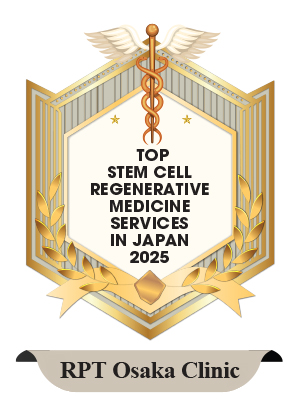
A man with partial facial paralysis underwent months of conventional treatment. Yet one side of his face remained motionless—his smile stuck in a lopsided stillness. Most regenerative clinics would have followed a familiar protocol: an intravenous stem cell infusion. In this method, cells circulate through the bloodstream with the aim of eventually reaching the damaged nerves. At RPT Osaka Clinic, Dr. Hiromichi Nishihara took a different approach. Drawing on decades of surgical experience, he made a bold decision—directly injecting 100 million mesenchymal stem cells (MSCs) into the patient’s facial nerve and ganglion. Within two months, the once-paralyzed muscles began to move. His affected eyelid lifted. His mouth regained balance. His face came back to life. At Osaka Clinic, regenerative medicine goes beyond administering stem cells. It’s about strategy, precision and results. Dr. Nishihara—one of Japan’s most experienced regenerative medicine specialists with over 27,000 stem cell treatments—and CEO Akihiro Toda, who also served as Secretary General of the Special Certified Regenerative Medicine Committee (the backbone of regenerative medicine in Japan), run the clinic with one guiding principle – evidence-based, ethical regenerative care that improves lives. “With integrity and passion, we take responsibility for our colleagues, our society and the impact we make. By holding ourselves to the highest standards, we strive to exceed expectations and earn patient trust,” says Dr. Nishihara. But Why Use Only MSCs? MSCs are at the forefront of regenerative medicine due to their unique ability to repair, regenerate and regulate the immune response, offering hope for conditions once considered untreatable. Their multi-lineage differentiation transforms them into bone, cartilage, muscle, nerve and skin cells, making them ideal for treating neurodegenerative diseases, joint disorders and tissue damage. Unlike conventional treatments that focus on symptom management, MSC therapy works at the cellular level, targeting the root causes of degeneration and inflammation. “The idea is to reset the body’s ability to heal itself. MSCs have that potential,” says Nishihara. The method of administration, however, is critical for this potential to be fully realized. Many clinics opt for IV infusion, but this approach lacks precision, relying on passive distribution rather than targeted action....Read more
Healthcare Insurance of the Year in APAC 2025
Securing the best care is a customer’s singular goal while sifting through healthcare options. With every turn, there are choices to be made—providers to consider, treatments to weigh and plans to compare. Cigna Healthcare (NYSE: CI) makes each step simpler and more empowering through expert guidance and support. A steadfast advocate of better health, Cigna Healthcare offer... Read more
CXO INSIGHTS

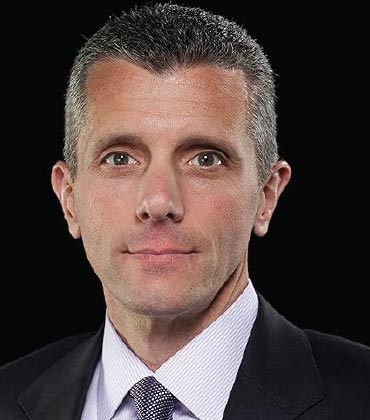
Revenue Cycle Management in the Australian Healthcare System
Sayeed Zia, Director, Finance and Corporate Services, Sydney Children's Hospitals
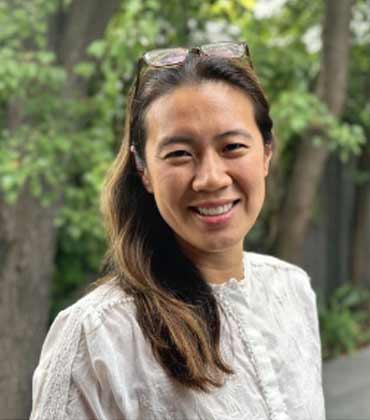
Solving The Complexities Of Telehealth Processes For Healthcare Workers
Natalie Yang, Medical Director, Radiology, Austin Health
Drug Delivery in Interventional Nephrology
Dr. Christopher Leo, Chairman, Medicine Cluster, Raffles Internal Medicine Centre
AI Adoption and Quality Improvement in Digital Healthcare
Alastair Mah, Vice President of Medical Affairs, United Family Healthcare
Biomedical engineering/ clinical engineering
Sojan Paul, Manager, Biomedical Engineering & Technology services, Western NSW Local Health District
Harnessing Emotional Intelligence in Nursing Leadership
Whitney Johnson, Clinical Supervisor, and Group Reflective Practice Facilitator, Alfred Health

Effective Hospital Leadership through Collaboration, Tech Skills and Negotiation
Bona Fernando, Hospital Director, Mayapada Hospital, a part of PT Surya Cipta Inti Cemerlang [JKSE:SRAJ]

Journey of a Clinical Nurse Manager: Overcoming Challenges and Enhancing Patient Experience
Janene Lawrence, Clinical Nurse Manager (Medical), Hutt Valley DHB
IN FOCUS

Unlocking Cellular Healing: Stem Cell Regenerative Medicine Services in APAC
Stem cell regenerative medicine rapidly transforms healthcare, offering promising avenues for treating degenerative diseases and traumatic injuries.

EDITORIAL
Unlocking the Potential of Regenerative Medicine
Emerging trends in stem cell science are reshaping healthcare, enabling groundbreaking treatments that repair and regenerate damaged tissues and organs. Researchers are advancing drug development with new regenerative techniques, while clinicians are personalizing therapies to improve outcomes in areas like neurodegenerative diseases and orthopedic care.
Reports state that the stem cell regenerative medicine APAC market, valued at $2.86 bn in 2024, is estimated to grow to $10.22 bn by 2029 at a CAGR of 28.9 percent.
A slew of technological and clinical breakthroughs are fueling this growth. Advances in mesenchymal stem cell therapies and induced pluripotent stem cells are expanding treatment possibilities across a wide range of medical conditions, offering new hope for patients with previously untreatable diseases. At the same time, AI-powered analytics are enabling researchers to unlock deeper cellular insights, accelerating discovery and enhancing the precision of regenerative therapies. Tools such as automated bioreactors and 3D bioprinting are streamlining manufacturing workflows and improving the scalability of cell-based treatments.
This edition of Healthcare Business Review APAC highlights recent developments in the stem cell regenerative medicine sector and offers insights into the transformative potential of these therapies. It features thought leadership articles from industry experts, including Whitney Johnson, clinical supervisor and group reflective practice facilitator at Alfred Health, who emphasizes the importance of emotional intelligence in nursing leadership to improve staff well-being, reduce turnover and strengthen healthcare delivery. Colin Baker, director of medical imaging and pathology contracts at Western Health, discusses the importance of team leadership in healthcare, focusing on collaboration across different disciplines to achieve the best patient outcomes.
The magazine also spotlights leading companies like RPT Osaka Clinic, which offers advanced mesenchymal stem cell therapy and immunotherapy for neurodegenerative, autoimmune and degenerative conditions. Holding Japan’s highest record of stem cell treatments, it prioritizes ethical, science-driven care to restore health and enhance quality of life.
We hope this edition provides valuable insights into how innovation, cutting-edge research and strategic implementation are setting new standards in the field of stem cell regenerative medicine.
