



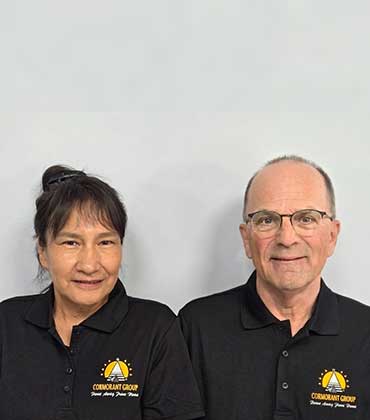
 Gwen Flett, General Manager and Ken Carroll, Executive Director
Cormorant Group plays an important role in that broader support network. As an umbrella management and business development organization representing the independent facilities at each of its properties, the group brings together the experience, relationships, and resources of those facilities to strengthen the services available to patients and other guests. Its collaborative model gives healthcare providers a trusted partner outside the hospital, to help coordinate practical needs, maintain communication, and support patients throughout their medical journey.
The collaborative approach also allows Cormorant Group to offer a broader range of accommodation options and support services than any one facility could provide on its own. For patients and other guests travelling from northern communities, that means greater choice, more coordinated support, and a more responsive experience throughout their stay.
This focus on strengthening services and responding to community needs is central to why Cormorant Group was created.
Ken Carroll, Executive Director of Cormorant Group, believes the organization emerged from recognizing a significant need among the communities it serves. “We recognize a very serious need in the community that we’re servicing, and we struggled to meet that need and have done so successfully,” he explains. The result is a model that combines the strengths of independent facilities while creating broader opportunities to improve how accommodation and related services support remote populations.
Building Trust through Community
The foundation of Cormorant Group’s approach is its understanding of the people it serves. Many patients arrive from communities where relationships, familiarity and collective support are central parts of daily life. Entering a large city for medical treatment can create uncertainty, particularly for those who have limited experience navigating urban systems.
We recognize a very serious need in the community that we’re servicing, and we struggled to meet that need and have done so successfully.
Gwen Flett, general manager, understands this transition deeply. Coming from a northern community herself, she recognizes the emotional challenges patients face when they leave familiar surroundings. “When they walk in through that door, the way that I want them to feel is that they are a part of the community here in our facilities,” she says.
That philosophy shapes the atmosphere within Cormorant Group locations. Staff members often come from northern or southern communities and understand the circumstances patients face when they arrive in Winnipeg. They provide information, answer questions and create a sense of familiarity for people who may otherwise feel isolated.
For many guests, communication is a major part of receiving support. Northern Manitoba includes communities with different languages and dialects, including Cree, Swampy Cree, Dene, Oji-Cree, Ojibwe and Saulteaux. Cormorant Group’s staff members who understand these cultural and linguistic backgrounds help patients communicate comfortably and confidently.
The organization’s role extends beyond accommodation because many guests need assistance understanding the systems surrounding their medical care. Staff do not replace healthcare professionals, but they help patients access information, communicate concerns and understand practical steps during their stay.
Supporting Patients through Complex Journeys
Medical travel from northern communities often involves obstacles that many urban residents may never encounter. Some communities have limited transportation options, and seasonal changes can affect access. Weather conditions, freeze-up periods and spring breakup can disrupt flights and delay travel plans.
 These disruptions can create serious consequences for patients who have scheduled treatments. Cormorant Group works to provide flexibility when travel challenges occur, coordinating with medical services when necessary and ensuring patients are not left without support because circumstances beyond their control have changed.
Carroll explains that the organization’s relationships with healthcare providers are an important part of this process. “We have good relationships with the hospital, so there’s communication directly between our facilities and the people at the hospital that are providing them with that care,” he says.
This communication helps Cormorant Group support patients receiving treatments such as dialysis or care related to high-risk pregnancies. The organization can help clarify appointment details, communicate concerns and advocate when misunderstandings occur between patients and healthcare providers.
Flett adds that many patients rely on this connection because they may not know where to turn when problems arise. “They are not just a number; they’re people,” she says, describing the importance of listening to guests and responding to their individual needs.
Creating a Community Away From Home
Cormorant Group’s home away from home philosophy extends throughout its facilities. Unlike traditional accommodations focused only on providing a room, its locations are designed to help patients maintain independence while still feeling connected. All of the suites include a private sleeping accommodations, bathroom, living room and kitchens or kitchenettes, and some have private bedrooms, allowing guests to experience comfort during extended stays.
The organization also creates opportunities for social connection. For elderly guests especially, staff encourage relationships among residents through activities such as puzzles, bingo, card games, entertainment and community gatherings. These moments help reduce loneliness during periods when patients may be separated from their families.
The emotional support provided by Cormorant Group is especially meaningful during difficult moments. When a guest passes away, the impact can affect staff and other residents because many relationships formed within the facilities become personal. The organization approaches these situations with compassion, recognizing the importance of grief and community connection.
Support also extends to new mothers traveling for high-risk pregnancies. Cormorant Group has supported births within its facilities and provides baby baskets containing essential items such as diapers, formula, clothing and care supplies. These efforts help families begin a new chapter with additional support during an already demanding period.
Beyond Accommodation
Cormorant Group’s services are built around the belief that patients deserve dignity throughout their healthcare journey. The organization provides practical assistance that can make an important difference, from helping coordinate transportation to offering food, wellness checks and additional comfort measures.
-
When they walk in through that door, the way that i want them to feel is that they are a part of the community here in our facilities.
The team’s willingness to respond to individual circumstances reflects its broader philosophy. Whether purchasing specialized furniture for a patient who needed better rest or helping families resolve difficult situations, Cormorant Group focuses on solutions rather than limitations.
One example involved a young man from Churchill who became stranded at an airport after a flight disruption. After his family contacted the facility for help, Cormorant Group staff located him, brought him back, provided food and accommodation, and helped him return home safely the following day. The incident reflected the organization’s commitment to supporting patients beyond the boundaries of its facilities.
A Model Built on Connection
Cormorant Group’s work demonstrates that healthcare access depends on more than medical infrastructure. A patient may reach a hospital, but without support navigating transportation, communication, cultural differences and unfamiliar environments, completing the healthcare journey can remain difficult.
By combining accommodation with advocacy, cultural understanding and community relationships, Cormorant Group protects the continuity that patients need during vulnerable moments. Its model recognizes that comfort is important, but trust is equally essential.
Looking ahead, the organization continues exploring ways to strengthen support for guests by developing relationships with additional community services and considering future opportunities that align with patient needs. Its focus remains on creating meaningful connections rather than simply expanding for growth.
For Cormorant Group, every patient represents a person with a story, a community and a support system that deserves recognition. The organization’s greatest contribution is not only providing a place to stay. It is preserving dignity, confidence and connection when patients are far from home and facing some of life’s most challenging experiences.
Strengthening the Meaning of Care
The distinction between Cormorant Group and conventional lodging providers lies in the organization’s understanding of responsibility. Medical accommodation is not simply a logistical solution for patients who need a temporary address. It is part of a larger support network that helps individuals maintain stability while they are separated from their communities.
This perspective influences how the organization designs its services and interacts with every guest. Staff members recognize that a patient arriving in Winnipeg may be carrying concerns that extend far beyond their medical condition. They may be worried about transportation, family members back home, understanding medical instructions or finding confidence in an unfamiliar environment.
Cormorant Group addresses these concerns by creating a setting where questions are welcomed and assistance is accessible. The organization’s relationship with First Nations communities and local healthcare providers creates a connected pathway of support that follows patients through different stages of their journey.
The same commitment can be seen in the way staff engages with communities beyond their facilities. Employees volunteer at community events, assist with local activities and contribute to the neighborhoods surrounding their locations. These actions reflect the same values that guide patient care: respect, responsibility and connection.
 For Cormorant Group, the idea of a home away from home is not defined only by physical surroundings. It is defined by the feeling that someone understands, someone is available and someone is willing to help. That feeling can transform an unfamiliar medical journey into one where patients retain a sense of belonging.
Its story represents a broader lesson for healthcare systems serving remote populations. Access must include the human elements that allow people to successfully receive care. Transportation, communication, cultural understanding and emotional support are not separate from healthcare access; they are essential parts of it.
Cormorant Group continues to demonstrate that meaningful healthcare support requires looking beyond the appointment itself. By creating trusted spaces for northern patients and their families, the organization helps ensure that distance does not become a barrier between communities and the care they need.
The organization’s approach shows that compassionate accommodation can become a bridge, connecting patients, families, communities and healthcare providers through every step of treatment.
