Thank you for Subscribing to Healthcare Business Review Weekly Brief
× 
Healthcare Business Review Weekly Brief
Be first to read the latest tech news, Industry Leader's Insights, and CIO interviews of medium and large enterprises exclusively from Healthcare Business Review
Application of AI and Clinical Variation Management to Deliver Improved Outcomes in Healthcare
Healthcare Business Review
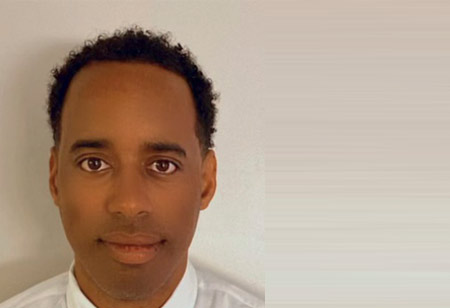
Bernard Brooks is the Enterprise Director of Data and Analytics at Flagler Hospital, a role similar to that of a Chief Analytics Officer. His role is to bring in a sustainable and self-service data delivery model to the organization and throughout the entire enterprise, which is growing. Flagler Hospital is a community-based hospital system but is currently expanding into St. John’s County, FL,growing several physician practices, urgent care centers and virtual villages in the area.
Could you give us a brief glimpse into your roles and responsibilities at Flagler?
We are working on organizing all of our data in a way that is reportable and actionable for our management team and executive leadership. We are also giving the rest of the organization a number of self-service options to satisfy their daily operational reporting needs. So that’s a big-picture snapshot of what I am responsible for at large. As such, the daily task is to manage about 10-20 new data requests per week on average ranging from standard reports, to dashboard builds to predictive analytics. We prioritize these along with other data projects requests, application upgrades, data feeds going to various vendors, interfaces, along with maintenance of the Enterprise Data Warehouse, and over a hundred databases that we manage. To the extent that we can, we would also like to keep the ball moving forward in implementing cutting edge technologies such as AI. This requires trying to normalize our data in such a way that we can do some innovative things in the process. Our core mission is health care, so we’re going to take care of our patients first, but as time permits, we also want to improve that care as best we can with sophisticated tools such as AI. The entire operation can feel like ‘flying an airplane while building it in the air’ at times, – it can be quite challenging trying to maintain all of your existing data assets, while delivering value and new insights in the process, but it’s a fulfilling assignment.
When it comes to AI, what is the role that the technology plays at your organization? How significant is AI for your processes?
It plays a significant role as it is growing and bringing in new opportunities. Initially, it was in a pilot phase, but now it plays a more significant role, principally in helping our physicians to treat patients. We use it to help us organize our care pathways for a specific disease states. For the future though, as we perfect the science behind it, it’s going to become a critical part of our business.
How do you see the evolution of the Artificial Intelligence arena a few years from now with regard to some of its potential disruptions and transformations?
The most significant application of AI currently is the shift and advances we are seeing now in the radiology and imaging space. That’s where AI has proven to have a relevant use-case that is provable, repeatable, and reliable. Imaging seems to be the first wave of production-ready AI-related applications that are going to take the industry by storm. At first, I think there will be a wave of several disparate medical technology vendors from all over coming up with diagnostic imaging AI models that are delivered as bolt - ons to existing applications. Then soon after, the prominent corporate EMR vendors - the Epic’s and Cerner’s of the world will either design their own, or buy up all of those companies and incorporate them into their products for repackaging and delivery directly to hospitals and doctors’ offices.
Some of this consolidation is already happening. Soon after that, medical language processing will mature to a place where it might have some good production use. It will altogether be a different endeavor to see across-the-board adoption amongst physicians and clinicians though.
However, if we are looking into ten years from now, then I think we will see a lot of maturity in the medical NLP space, in terms of commercial application. Also, there’s a lot of growth taking place in genomics and medical therapies. But those are a little bit further down the line in terms of being able to prove themselves and overcoming the big FDA hurdle, (which is a significant bottleneck) since many of these algorithms are being treated like medicines in the regulatory arena. It is going to be a while before we see true breakthroughs in genomics and no doubt,legislation will need to catch up. It will be even longer still before we have AI playing a serious role in actually augmenting the care that physicians currently give with purely human intelligence in terms of diagnosis and therapeutics.
Our core mission is health care, so we’re going to take care of our patients first, but as time permits, we also want to improve that care as best we can with sophisticated tools such as AI
What would be the single piece of advice that you could impart to a fellow or aspiring professionals in your field?
The most significant piece of advice that I can give them is the importance of the ‘intangibles’. What I mean by that is that it’s a lot easier to today to obtain data scientists and IT resources, and to be sure, that’s what everybody is chasing. But counter-intuitively, that’s not what it takes to get a project off the ground and executed to successful completion. You can always get the data scientists and programmers to iterate and improve any product, they are tremendous asset - but the biggest hurdle to success in any medical or healthcare related project is still going to be physician and clinician adoption. That’s what makes or breaks every project, because they are the front-line staff that have to use the tools and believe in the results for use with their patients. And up to this point there is a certain fault-tolerance that is embedded in our culture around medications and their effectiveness that does not currently exist with AI applications. AI failures, even if proven 85% accurate, are viewed much more negatively then say a medication that’s only 60% effective.
So my advice would be to get the clinical and physician champions up and adopting early - if not at the very beginning of the project - with very – very, strong physician leadership. And if they’re in on it from the start and they have a stake in the success of the project, then you’ll have a project that once it proves itself, has a robust mechanism to operationalize whatever insights you get out of the AI. Secondarily, because these projects can be quite costly up front in terms of investment, there’s always going to be an ROI pressure coming from executives. So for aspiring professionals in this space I would say that while the ‘data science’ aspects of AI are easily the most exciting parts to build competency in, it would be well worth their investment of time to learn how to manage projects both at a department and enterprise level.


The CEO's Playbook for Modern Hospital Management
Ts. Dr. James Chong, Chief Executive Officer, Columbia Asia Hospital
Leading Case Management Through Communication and Systems Thinking
Alison Boone, MSRN, CCM, Director of Case Management, Mass General Brigham
Creating a Culture of Trust and Accountability in Medication Safety
Ambrosia Johnson, System Manager, Pharmacy Medication Safety, CommonSpirit Health