
Thank you for Subscribing to Healthcare Business Review Weekly Brief
× 
Healthcare Business Review Weekly Brief
Be first to read the latest tech news, Industry Leader's Insights, and CIO interviews of medium and large enterprises exclusively from Healthcare Business Review
A featured contribution from Leadership Perspectives: a curated forum reserved for leaders nominated by our subscribers and vetted by the Healthcare Business Review Advisory Board.

Icon Group
Redesigning Cancer Care Through Standardisation And Global Collaboration
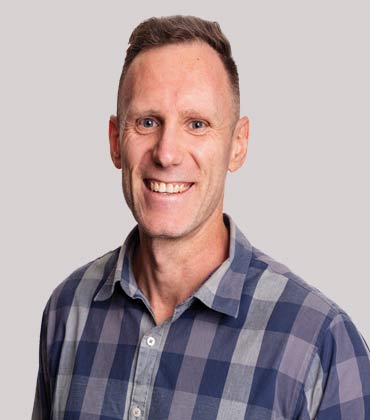
Trent Aland
Trent Aland is the Executive Manager – Clinical Care at Icon Group, bringing over 20 years of experience as a radiation oncology medical physicist. He became a Qualified Medical Physics Specialist through the Australasian College of Physical Scientists and Engineers in Medicine (ACPSEM) in 2008 and has since held leadership roles including National Director and Group Director of Medical Physics, overseeing a global team of 50 medical physicists.
Since joining Icon Group in 2016 at its first integrated cancer centre in North Lakes, Brisbane Trent has played a key role in shaping the organisation’s clinical capabilities. In 2023, he was appointed to lead the newly established Clinical Care team, which unifies centralised functions in Oncology Nursing, Medical Physics, Radiation Therapy, Clinical Governance and Education, and overseeing a team of 90 staff. He has also contributed to the medical physics profession through board membership and working group involvement with ACPSEM.
From our experience in establishing over 40 radiation oncology centres globally, standardisation is vital — it provides the foundation for building and scaling our centres and ensuring we deliver quality, exceptional patient care across an increasingly global footprint. It enables efficient technology implementation, without recreating processes each time, and allows us to deliver existing training and education programs without starting from scratch.
Standardisation also helps leverage our collective experience into troubleshooting issues, as similar challenges have likely occurred elsewhere in the network. Where clinical staff experience varies across countries and regions, we can upskill teams to a consistent standard using proven programs that use remote training technology, universal assessment and standardised processes. Without standardisation, none of this would be easily achievable.
While we deliver clinical standardisation, we also maintain flexibility to respect cultural differences and local practices. We begin by understanding local norms, then adapt accordingly.
Overcoming Global Challenges in Clinical Operations Through Standardised Practice
Staff experience and specific roles and responsibilities vary across regions. For example, what a radiation therapist does in Australia and what education they receive can be markedly different to that of other countries. This is where we rely on our education and training programs within our clinical care team to upskill staff.
Communication can also be an issue, but with our centralised clinical care team, we are able to connect staff between our centres to ensure they have access to other team members. We also use tools, such as SharePoint and Microsoft Teams, for effective staff-staff communication.
Standardisation provides the foundation for building and scaling high-quality cancer care across our global network.
Remote support and addressing fluctuations in workload can also present issues. For example, if there is a greater workload on a given day and a staff member takes unexpected leave, this can cause short term workload issues, or there may be high patient volumes at a centre who require further clinical support. We address this via remote support and an agile connected workforce - providing dashboards to sites allowing teams to ask for assistance from other sites and perform any tasks that can be done remotely.
We are proud of the clinical implementation of stereotactic radiation therapy across our global network including regional locations in Australia, and into Singapore, New Zealand, and Mainland China. This allows us to deliver best possible care to our patients no matter where they are.
We’ve also implemented an AI-based contouring tool across our sites in Australia, New Zealand, and Singapore. This is a tool that drives both quality and efficiency in our patient workflows and helps patients begin their treatment sooner.
Standardisation certainly plays a role here, as we know the workflows across all our centres are very close to being the same. Any tools we implement will contribute to delivering a standard level of high-quality care. This standardisation not only ensures consistent care across our network, but also enhances the global mobility of our workforce. By aligning processes and practices globally, we enable staff to move seamlessly between locations, ensuring that they can deliver the same high standard of care no matter where they are based.
We also have a number of ‘practice units’ in place that govern processes and oversee any clinical changes and implementation. For example, we have a Radiotherapy Practice Unit (RPU) that consists of members from our global teams including radiation oncologists, radiation therapists, medical physicists, and oncology nurses. All changes require input and approval from all disciplines and geographies.
At Icon, we have a strategic plan in place that we call our Full Potential Plan. This is essentially a series of global initiatives that are supported by our transformation team (this team provides support for project management and reporting, change management, data analytics, etc.) and include all the various disciplines across our network and teams. This helps to ensure that any initiatives aren’t happening in isolation across the different areas of our business.
In addition to our clinical care structure, we obviously also have a strong operational structure in place which helps to foster this collaboration.
Look to standardise where it makes sense to do so and where possible, do this before processes and practices are established. Standardisation will aid greatly with building in efficiency, capitalising on existing capability, and optimising resources.
Never underestimate the importance of change management and ensure teams are involved in any initiatives as early as possible.
When looking to address issues using software and in particular AI, do your homework as the success of these will depend heavily on your processes and data platforms (i.e., your foundations) and what might work for one organization may not work for another. This isn’t to suggest to not explore these, but merely to conduct a thorough investigation before proceeding.
The articles from these contributors are based on their personal expertise and viewpoints, and do not necessarily reflect the opinions of their employers or affiliated organizations.
