Healthcare Business Review

Advertise

with us

  • Europe
    • US
    • EUROPE
    • APAC
    • CANADA
    • LATAM
  • Home
  • Sections
    Business Process Outsourcing
    Compliance & Risk Management
    Consulting Service
    Facility Management Services
    Financial Services
    Healthcare Construction
    Healthcare Education
    Healthcare Marketing
    Healthcare Procurement
    Healthcare Staffing
    Healthcare Tech
    Medical Transcription and Translation
    Medical Transportation
    Psychological Services
    Radiology
    Therapy Services
    Waste Management
    Business Process Outsourcing
    Compliance & Risk Management
    Consulting Service
    Facility Management Services
    Financial Services
    Healthcare Construction
    Healthcare Education
    Healthcare Marketing
    Healthcare Procurement
    Healthcare Staffing
    Healthcare Tech
    Medical Transcription and Translation
    Medical Transportation
    Psychological Services
    Radiology
    Therapy Services
    Waste Management
  • CXO Insights
  • News
  • Vendor Viewpoint
  • Conferences
  • CXO Awards
×
#

Healthcare Business Review Weekly Brief

Be first to read the latest tech news, Industry Leader's Insights, and CIO interviews of medium and large enterprises exclusively from Healthcare Business Review

Subscribe

loading

Thank you for Subscribing to Healthcare Business Review Weekly Brief

  • Home
  • CXO Insights

Emerging Diagnostic Technologies in Healthcare
Healthcare Business Review

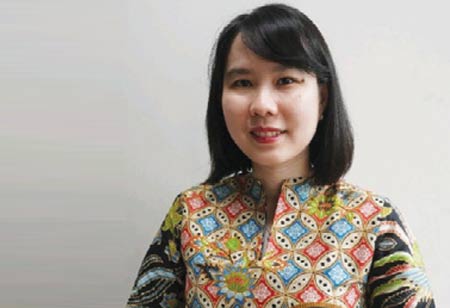
Winny Xie, Molecular Predictive & Diagnostic Lab Head, PT Prodia Widyahusada Tbk
Tweet

As a Molecular Predictive & Diagnostic Lab Head, Winny Xie designs a molecular diagnostic method to detect molecular biomarkers, which is useful in medical areas such as infectious diseases, genetic disorders, pharmacogenomics, prenatal testing, etc. She also does the method evaluation and the analysis of the evaluation result. The method will then be used as routine clinical testing.


What are the challenges that industry leaders are facing in the diagnostic industry?


I believe one of the major concerns in the diagnostics industry was testing. We had trouble finding the requisite reagents, equipment, and skilled staff to conduct the essential tests. It was crucial to confirm the test in our lab to ensure that the reagent and the apparatus could detect COVID 19 on time. To make the requirement more permissive for the distributor to register the reagent and instrument in Indonesia, the government took the initiative to develop the in-house test.


Another challenge was to support patient care and lower the cost of testing. To stop the spread of viruses, the government intended to conduct testing at a cost that patients could afford. As a result, many laboratories must bargain with the reagent distributors, and the laboratories and the reagent suppliers must lower their operating expenses and reagent prices to support this program.


How do you manage the rise in testing demand, and how do you give the patient a quicker diagnosis?


We consider the sequence of tests to satisfy the needs for preventative and preemptive testing. The later stage will be focused on therapy to offer a speedier diagnosis. Before the disease manifests, we do a reassessment, and then we design the diagnostic test once the sickness has manifested and the correct diagnosis is required. We can assist in determining the patient's prognosis following the onset of the condition as well as the most effective course of therapy.


we consider the sequence of tests to satisfy the needs for preventative and preemptive testing, and the later stage will be focused on therapy to offer a speedier diagnosis.


What technologies have you used to deliver faster and more efficient results for your clients?


In a separate lab at Prodia, we work with a variety of technologies, including molecular markers for prognosis and prediction, an advanced immunology lab, mass spectrometry, separation sciences, and microbiological methods. In addition, Sanger sequencing and Next-Gene sequencing are technologically provided psychosocial therapies for mental health. For anatomy pathology, it comprises of a tool to make a slide out of tissues and a processor to extract a piece of tissue that has been implanted in film. However, we still require some instruments to detect many pathogens from a single cell. Our science laboratory and mass spectrometry set us apart from competitors. Only a few governments and private hospitals conducted tests for infectious illnesses. But following the pandemic, many labs began to invest in and concentrate on core testing, which includes cancer diagnostics and targeted cancer therapy.


Is there any particular technology that has revolutionized the diagnostics industry?


In 2017, we started working on our first next-generation sequencer, which we are presently experimenting with. We only have one type of external sensing sequence at the moment. Still, we would like to explore next-generation sequencing using the many technologies that are currently accessible because they might function differently and serve different purposes for the instrument.


What is your one piece of advice for industrial leaders on how to provide clients with a faster diagnosis?


To collaborate on this health endeavor, I think we should emphasize government-sponsored medical research and initiatives as well as private or hospital lab work. We examine lab results when required, and sometimes labs can be helpful in determining patient care and management .


Weekly Brief

loading
> <
  • Current Issue
  • Current Issue
  • Intensive Care Medicine -The Original Tech Disruptor in Healthcare

    Mainak Majumdar, Director, Intensive Care Services, Mercy Health Australia
  • Bridging IT and Healthcare for Smarter Care

    Benedict Sulaiman, Director of IT-CTO, Mandaya Hospital Group
  • Where Science Meets Beauty: The Medical Aesthetics Industry

    Roger Kapoor, Senior Vice President, Beloit Health System
  • In the Future, Robots Will Replace Wound Care Doctors

    Kevin Orsak, Wound Care Program Manager, UT Southwestern Medical Center
  • Transforming Healthcare Through Innovation, Data, And Global Standards

    Ana Maria Y. Jimenez, Executive Director of Nursing, Aspen Medical - Fiji
  • Evolving Plastic Surgery

    Dr. Geraldine Lee, Plastic, Reconstructive, and Aesthetic Surgery service consultant, Tan Tock Seng Hospital
  • Harnessing Emotional Intelligence in Nursing Leadership

    Whitney Johnson, Clinical Supervisor, and Group Reflective Practice Facilitator, Alfred Health
  • Director of the Cosmetic and Reconstructive Center

    Henri P. Gaboriau, MD, FACS, Head of Department ENT/Facial Plastic and Reconstructive Surgery, Adirondack Health

Read Also

Business Intelligence in Manufacturing of Medical Devices

Business Intelligence in Manufacturing of Medical Devices

Hernando Garrido, Director of Manufacturing Engineering, Fresenius Medical Care North America
READ MORE
Telehealth: An Integral Part of Healthcare System in the New Normal

Telehealth: An Integral Part of Healthcare System in the New Normal

Nan Nicponski, Assistant Vice President, Intermountain Healthcare
READ MORE
Management of First-Time Patellar Dislocation: A New Consensus Based Approach to Treatment

Management of First-Time Patellar Dislocation: A New Consensus Based Approach to Treatment

Lars Blond, Senior Orthopedic Surgeon, Aleris Danmark
READ MORE
Electronic Procurement for Implants: Let's Do This!

Electronic Procurement for Implants: Let's Do This!

Jack Koczela, Vice President Supply Chain, Froedtert Health
READ MORE
Telemedicine for Obstetric Care: A Fantasy or the Wave of the Future?

Telemedicine for Obstetric Care: A Fantasy or the Wave of the Future?

Veronica Gillispie-Bell, MD, MAS, FACOG, System Medical Director of Health Outcomes, Ochsner Health
READ MORE
Uncovering the Genetics Underlying Rare Diseases

Uncovering the Genetics Underlying Rare Diseases

Francesc Palau, SJD Distinguished Investigator, Sant Joan de Déu Children’s Hospital and Research Institute, and CIBERER
READ MORE

Telemedicine for Obstetric Care: A Fantasy or the Wave of the Future?

Veronica Gillispie-Bell, MD, MAS, FACOG, System Medical Director of Health Outcomes, Ochsner Health

Uncovering the Genetics Underlying Rare Diseases

Francesc Palau, SJD Distinguished Investigator, Sant Joan de Déu Children’s Hospital and Research Institute, and CIBERER

SSIs Are Not Minor Short-term Problems, They're Major Long-term Burdens

Gianluca Casali, Medical Director, UK and Ireland JnJ Medical Devices, Johnson & Johnson

Quality Learning Experiences: A Clinical Pipeline for Work Force Development

Darcy A. Wikoff, DNP, FNP-C, Clinical Director of Graduate Education, WellSpace Health
Loading...
Copyright © 2026 Healthcare Business Review. All rights reserved. |  Subscribe |  Sitemap |  About us |  Newsletter |  Feedback Policy |  Editorial Policy follow on linkedin
CLOSE

Specials

I agree We use cookies on this website to enhance your user experience. By clicking any link on this page you are giving your consent for us to set cookies. More info

This content is copyright protected

However, if you would like to share the information in this article, you may use the link below:

https://www.healthcarebusinessrevieweurope.com/views/emerging-diagnostic-technologies-in-healthcare-nwid-3118.html