Healthcare Business Review

Advertise

with us

  • Europe
    • US
    • EUROPE
    • APAC
    • CANADA
    • LATAM
  • Home
  • Sections
    Business Process Outsourcing
    Compliance & Risk Management
    Consulting Service
    Facility Management Services
    Financial Services
    Healthcare Construction
    Healthcare Education
    Healthcare Marketing
    Healthcare Procurement
    Healthcare Staffing
    Medical Transcription and Translation
    Medical Transportation
    Psychological Services
    Radiology
    Therapy Services
    Waste Management
    Business Process Outsourcing
    Compliance & Risk Management
    Consulting Service
    Facility Management Services
    Financial Services
    Healthcare Construction
    Healthcare Education
    Healthcare Marketing
    Healthcare Procurement
    Healthcare Staffing
    Medical Transcription and Translation
    Medical Transportation
    Psychological Services
    Radiology
    Therapy Services
    Waste Management
  • CXO Insights
  • News
  • Vendor Viewpoint
  • Conferences
  • CXO Awards
×
#

Healthcare Business Review Weekly Brief

Be first to read the latest tech news, Industry Leader's Insights, and CIO interviews of medium and large enterprises exclusively from Healthcare Business Review

Subscribe

loading

Thank you for Subscribing to Healthcare Business Review Weekly Brief

  • Home
  • CXO Insights

Learning and Training in Modern Healthcare
Healthcare Business Review

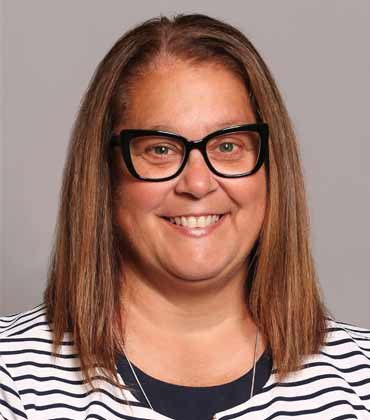
Gail Games, MHA, FACHE, VP, Chief Learning & Development Officer, Holzer Health System
Tweet

Over the past five years, training in the healthcare setting has had to evolve to meet the needs of individual staff and providers, as well as overall health care systems. From the strains of COVID to ongoing staffing shortages, training departments had to get better at “meeting staff where they are” by offering less traditional classroom style trainings, and more engaging and interactive trainings.  To remain effective and relevant, health care trainers had to get better at assessing educational needs and creating training that both fulfills learning objectives and engages the learner, no matter the platform or length of training.  One size certainly, no longer fits all, and knowing when and how to pivot away from traditional classroom trainings to quick and engaging platforms like TikTok will be the way to success with your end-user.


The pandemic caused healthcare to evolve and develop in a myriad of ways, including creating new venues and ways of learning “at a distance”.   In 2019, classroom training was the “go-to” method of learning.  Scheduling the room, building the slide deck, and registering individuals were simple yet effective.  However, as we moved into 2020, meeting in groups was no longer acceptable.  We had to learn to pivot and train through TEAMS, Zoom, or WebEx, depending on the organizational preferred platform.  Finding innovative ways of engaging participants became a creative challenge for the trainer, because not having your camera “on” implied you weren’t paying attention.  We found that giving attendees the information and asking them to review prior to class was a great way for us to then just facilitate the discussion.  All cameras were required to be “on” for all participants.  The screen was filled with faces instead of slides.


In the short-staffed world of healthcare, employees have neither time to sit in the classroom to learn, nor attend a virtual training that takes more than a lunch break. Instead, trainers are becoming more quick and agile with training and learning.


Fast forward to 2023, where the constant strains of the pandemic have been replaced by the almost constant stress of recruiting, training, and retaining staff.  In the short-staffed world of healthcare, employees have neither time to sit in the classroom to learn, nor attend a virtual training that takes more than a lunch break. Instead, trainers are becoming more quick and agile with training and learning. For example, TikTok is a current favorite for all types of individuals and can be accessed through many devices.  Small educational videos such as hand hygiene, identifying a stroke, urgent care versus an emergency room visit, changing sheets in a hospital bed are just a few that can be quite effective in short bursts of information.  A YouTube channel can also be a creative way to manage training and education.   Videos have been very effective with our staff to soak in information.  Another example is podcasting, which can be quite informational and effective.  We are launching ours in January of this year.  Equipment can be of good quality, yet inexpensive.  Publishing is also quite simple and can be done for free on several platforms. Let your creative staff take it and run. 


In today’s healthcare environment of burned out and tired staff, we cannot stop training.  Instead, we must create less didactic learning environments.  For example, many organizations are still counting on the learning management system (LMS) to push out education.  Although an LMS is valuable for compliance and accountability with regulatory bodies, it is the system through which very little is learned.  Clicking through slides and taking the subsequent quiz–no matter how many times–is effective for “checking the box” that it is completed. 


Health care must assure that training needs are met by creating learning opportunities that fit within the fast paced health care environment, while meeting staff and providers “where they are at”.


Weekly Brief

loading
> <
  • Current Issue
  • Current Issue
  • Continuous Improvement in the Clinical Laboratory

    Tania Casanova Rangel, Medical Director of Blood Bank and Medical Laboratory, Las Américas Auna
  • Navigating Healthcare Consulting: A Fusion of Innovation, Leadership, and Human-Centric Approaches

    Claudio Soto Angelo, Chief Medical Officer, Clínica Los Coihues
  • Addressing Burnout in Healthcare Settings: A Compassionate Approach

    Thomas Pierce, Clinic Operations Manager II - Dermatology and Mohs Surgery, Providence
  • A Circular Healthcare Economy

    Calvin Parshad, National Director, Business Development, DaVita Kidney Care
  • Trends in Consumer-Centered Medicare Benefits

    Dr. Steven Angelo, Chief Medical Officer, Medicare and Retirement - Northeast Region, UnitedHealth Group
  • Charge Reconciliation Challenges - Professional Charges and Multiple EMRs

    Mat Clerrico, CHFP, CRCR, CSPPM, CSPR, CSAF, CSBI, Revenue Cycle Director, South County Health
  • Integrating a Continuum of Post-Acute, Home, and Supportive Care within a Public, Community Hospital System

    J. Morgan Allen, CHPCA, CMPE, Administrative Director, Supportive Care and Community Impact, Chesapeake Regional Healthcare
  • A New Medicare Advantage Model Could Transform How Care is Delivered at End-of-Life

    Josie Aquino, Vice President of Quality, VNS Health

Read Also

Creating a Culture of Trust and Accountability in Medication Safety

Creating a Culture of Trust and Accountability in Medication Safety

Ambrosia Johnson, System Manager, Pharmacy Medication Safety, CommonSpirit Health
READ MORE
National Proton Center Opens in Collaboration with Children's National Hospital

National Proton Center Opens in Collaboration with Children's National Hospital

Jeffrey Dome, Senior Vice President, Children’s National Hospital
READ MORE
Delivering Growth, Collaboration and Innovation Tactics for Nursing

Delivering Growth, Collaboration and Innovation Tactics for Nursing

Imana Mo Minard, Director of Nursing, Corewell Health
READ MORE
Implementation of Pharmacist Credentialing and Privileging at Oregon Health and Science University

Implementation of Pharmacist Credentialing and Privileging at Oregon Health and Science University

Hyelim Lee (PharmD candidate), Gary Lau, Clinical Pharmacy Manager - Specialty Pharmacy Services PharmD, BCOP, BCACP and Amy Szczukowski, Director, Specialty Pharmacy Services, RPh, Oregon Health & Science University
READ MORE
The Real Obligation of Leadership

The Real Obligation of Leadership

Robin Ferrer, Vice President, Chief Nursing Officer, RWJBarnabas Health
READ MORE
The Strategic Voice Defining the Future of Hospital Supply Chains

The Strategic Voice Defining the Future of Hospital Supply Chains

James Fusco, Director of Strategic Sourcing, Yale New Haven Health
READ MORE

The Real Obligation of Leadership

Robin Ferrer, Vice President, Chief Nursing Officer, RWJBarnabas Health

The Strategic Voice Defining the Future of Hospital Supply Chains

James Fusco, Director of Strategic Sourcing, Yale New Haven Health

Electrophysiology at the Core of Next-Gen Eye Care Solutions

Minzhong Yu, Director, Ophthalmic Electrophysiology, Department of Ophthalmology, University Hospitals, Case Western Reserve University

How Nurses Can Sustain Hospitals amid Reimbursement Challenges

Justin Floyd, Director of Nursing- Critical Care Service Line, Peace Health
Loading...
Copyright © 2026 Healthcare Business Review. All rights reserved. |  Subscribe |  Sitemap |  About us |  Newsletter |  Feedback Policy |  Editorial Policy follow on linkedin
CLOSE

Specials

I agree We use cookies on this website to enhance your user experience. By clicking any link on this page you are giving your consent for us to set cookies. More info

This content is copyright protected

However, if you would like to share the information in this article, you may use the link below:

https://www.healthcarebusinessrevieweurope.com/cxoinsight/learning-and-training-in-modern-healthcare-nwid-1056.html