
Thank you for Subscribing to Healthcare Business Review Weekly Brief
× 
Healthcare Business Review Weekly Brief
Be first to read the latest tech news, Industry Leader's Insights, and CIO interviews of medium and large enterprises exclusively from Healthcare Business Review
Looking back on my career, the lesson that has shaped my leadership most profoundly is the principle of “fail fast.” In my earlier work in creative and digital marketing, I learned that not every idea or campaign succeeds, and realizing this quickly often saves both time and resources. The key is to pivot with agility—to evolve strategies when they fail to achieve intended outcomes. Marketing, if you listen objectively, is remarkably candid. Signals such as audience disengagement, misalignment between message and intent, or internal confusion all indicate it is time to adjust. For example, if people are seeing a message but not taking action, something is disconnected. It may be too emotional, too vague, or too complicated. Internal confusion can also serve as a warning sign: if staff, providers, or leadership are interpreting a campaign differently than intended, the market likely is too. Equally, the pace at which a campaign gains traction offers clues. Strong campaigns usually show momentum early—whether through increased engagement, stronger referral conversions, or improved search visibility. If we spend too much time explaining a campaign instead of having the audience naturally understand it, that is a clear indication that a pivot is needed. Fail fast, in my view, does not mean careless experimentation. It means maintaining the discipline to recognize when a strategy isn’t producing the outcomes intended and adjusting before resources are wasted. This mindset has allowed me to lead as an adaptable innovator, constantly taking on new skills, experimenting with tools, and ensuring that my team is always thinking forward rather than backward. Simplifying Complex Messages Healthcare marketing presents a unique challenge: communicating the value of complex services across multiple specialties and patient audiences. At Regional One Health, we have learned that the simplest message often resonates most effectively. I’ve always encour...Read more
Top 10 Healthcare Service Providers 2026
For decades, American healthcare infrastructure has centered around large hospital campuses. But healthcare delivery is undergoing a structural shift. As chronic disease becomes the dominant driver of healthcare utilization, care must increasingly move closer to where patients live. CD Healthcare Infrastructure Manager believes the future of healthcare... Read more


Pharmaceutical and medical device companies invest heavily in research and development, regulatory approval and manufacturing. Yet even clinically effective products can struggle to achieve success after launch. Often, this is caused by the absence of a clear and sustainable reimbursement pathway. Directive Strategy Group helps pharmaceutical and medical device comp... Read more
CXO INSIGHTS

Nursing Leadership, Reimagined
Susan Brooks, Director of Patient Care Services, Catholic Health

Transforming Healthcare Delivery with Systems Thinking
Dr. Timeka Russell, Pharmacy Enterprise Director of Procurement, Inventory, and Supply Chain, NewYork-Presbyterian Hospital

Strengthening Nursing Teams through Trust and Presence
Valerie Seccia, Director of Nursing Services, Temple Health

Leading Quality and Equity in Healthcare
Eileen Jaskuta, Vice President of Quality and Patient Safety, Main Line Health

Strategic Sourcing that Strengthens Care, Quality and Resilience
Ian OMalley, Executive Director Strategic Sourcing, University of Chicago Medicine

Truth, Trust and the Culture of Compliance
Judy Backhaus, Vice President Compliance and Risk/Compliance & Privacy Officer, Heritage Health

Building Leadership Capability through Learning and Alignment
Heather Frommack, MS, RDN, CPTD, Director of Leadership and Organizational Development, HCA Healthcare


IN FOCUS

Maximizing Impact: Key Trends Shaping Healthcare Consulting
Healthcare consulting plays a crucial role in enhancing operational efficiency, improving the quality of care, and elevating the patient experience.
The Rise of Virtual Assistants: A New Era in Healthcare Management
Virtual assistants improve efficiency, communication, and operational performance in healthcare systems.
EDITORIAL
Empowering the Future of Healthcare Delivery
Healthcare services continue to evolve as providers balance rising patient expectations, workforce shortages and increasing operational complexity. Digital technologies, value-based care models and data-driven decision-making are reshaping care delivery while expanding access beyond traditional clinical settings. Healthcare organizations are also investing in integrated care, remote monitoring and personalized treatment strategies to improve patient outcomes, strengthen efficiency and deliver a more seamless care experience.
This edition of Healthcare Business Review explores the latest developments shaping healthcare services and highlights organizations that are helping providers improve care delivery, operational excellence and patient engagement.
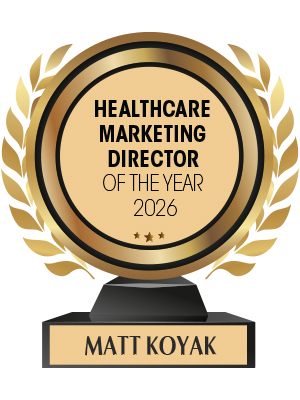
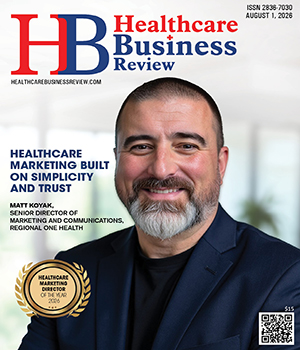
Our cover story recognizes Matt Koyak, Senior Director of Marketing and Communications at Regional One Health, as Healthcare Marketing Director of the Year 2026. His leadership demonstrates that effective healthcare marketing is built on simplicity, audience understanding and the willingness to adapt quickly when strategies fall short.
Alongside the cover story, we highlight the Top 10 Healthcare Service Providers 2026, for advancing patient care through integrated services, operational excellence and improved clinical outcomes. Their work is helping build a more efficient and patient-centered healthcare ecosystem.
This issue also features an insightful article from Troy Green, Director of Talent Acquisition at Luminis Health, who discusses the importance of building a resilient healthcare workforce through strategic talent acquisition, employee engagement and long-term workforce planning. The edition also includes perspectives from Judy Backhaus, Vice President, Compliance and Risk at Heritage Health, who shares how strong compliance frameworks, risk management and privacy practices help healthcare organizations navigate evolving regulatory requirements while maintaining patient trust.
Rounding out the issue are stories of organizations delivering innovative healthcare services through technology, clinical expertise and patient-centered strategies. Their work demonstrates how modern healthcare providers are improving access, enhancing care coordination and achieving better clinical and operational outcomes. We hope this edition provides valuable insights and helps you identify the right partners to support your organization’s evolving healthcare priorities.
