
Thank you for Subscribing to Healthcare Business Review Weekly Brief
× 
Healthcare Business Review Weekly Brief
Be first to read the latest tech news, Industry Leader's Insights, and CIO interviews of medium and large enterprises exclusively from Healthcare Business Review
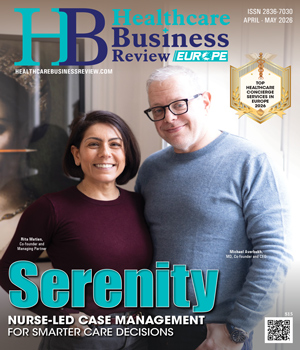
Why has coordinating modern healthcare become increasingly difficult for patients navigating multiple specialists Healthcare information, subspecialties and treatment possibilities have multiplied to a point where managing them has become a major challenge. The number of options continues to grow, requiring physicians to narrow their focus to specific domains. That depth strengthens clinical precision. It also creates a fragmented system. Patients are left to coordinate multiple specialists, diagnostics and opinions across disconnected touchpoints. Even well-informed individuals struggle to sequence care. The issue is not access. It is the ability to responsibly manage expanding possibilities. How does nurse-led case management add accountability to complex healthcare decision-making processes Serenity was founded in response to that reality. Based in Portugal, the nurse-led healthcare concierge provider was built on a clear belief articulated by its leadership: everyone deserves better managed care. “Today, the AI models are much more sophisticated, and yet they are not mistake-proof,” says Michael Averbukh, MD, co-founder and CEO. “They still need human eyes. They need to be humanly verified and managed because the tools are improving, but that improvement does not remove the need for someone to take responsibility.” Technology can aggregate information. It cannot assume responsibility. It cannot determine which specialist should come first, what testing should precede a consultation or how separate opinions should be reconciled. That requires accountable clinical judgment. Serenity adds that layer of responsibility. Every member is assigned a licensed nurse who remains accountable across the care process. Administrative booking is secondary to medical evaluation, and long-term clinical relationships replace the typical call-centre model....Read more
Pain Management
MIVI Salud is one of Spain’s foremost multidisciplinary pain care providers and it isn’t just treating chronic pain but really redesigning how clinicians approach it. For too long, the standard care model in Spain has been disjointed. Patients have to toggle between appointments, referrals pile up and specialists work in silos. Nearly one in four people in Spain lives with chronic p... Read more
CXO INSIGHTS

Revolutionizing Ambulance Services: The Future of Emergency Care in Europe
Thomas Bjarnt, Transformation Specialist, Falck

Standardization of Solutions in Hospitals: a Path to Efficiency
Nuno Peres, Head of Construction, CUF - Hospitals and Clinics

Educating for Excellence: Nurturing Tomorrows Healthcare Leaders
Pearly Thomas, Head of Clinical Education, Berkshire Healthcare NHS Foundation Trust

Compassionate Leadership in Healthcare
Gil Figueiredo, Corporate Matron, James Paget University Hospitals, NHS Foundation Trust

Transforming the Back Office of P2P
Misty Garrison, Director of Procurement Operations, UVA Health

Rethinking Healthcare Risk in an Age of Convergence
Benjamin Lego, Senior Director of Risk Management, WellSpan Health
Revolutionising Patient Experience: UHCW's Journey
Merlisa de Jesus, Head of Patient Access, University Hospitals Coventry and Warwickshire (UHCW) NHS Trust

IN FOCUS

European Healthcare Navigation: Rise of Concierge Medical Support Services
Healthcare concierge services in Europe are expanding through digital coordination, preventive health planning, cross-border care support, and personalised patient guidance.
EDITORIAL
Clinical Continuity and Accountability Redefine Care Delivery
European healthcare systems face a structural paradox: increasing clinical sophistication alongside growing fragmentation in care delivery. As specialties expand and treatment pathways become more complex, patients are often left navigating disjointed systems without built-in continuity. This edition of Healthcare Business Review Europe examines healthcare concierge services as a targeted response, elevating coordination, accountability and clinical oversight from optional considerations to essential functions. The evolution prioritises the precise management of complexity over simple access. Concierge models are progressing beyond administrative support into clinically governed frameworks that ensure structured patient journeys.
Workforce pressures, operational inefficiencies and rising patient expectations continue to strain traditional models. Technology is advancing rapidly, yet persistent accountability gaps underscore the continued need for human-led orchestration. Organisations are redefining care by sequencing, delivering and sustaining it with greater precision, favouring outcome-driven approaches over volume-based activity in responsibility-centred healthcare.
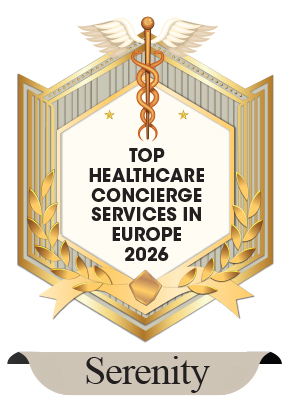
The cover story, Serenity, recognised as the Top Healthcare Concierge Services Company In Europe 2026, exemplifies this shift through its nurse-led case management model. By placing registered nurses at the centre of every patient experience, Serenity replaces fragmented interactions with accountable clinical oversight. It coordinates diagnostics, specialist care and follow-ups under independent supervision, free from provider bias, thereby fostering greater trust and continuity.
Contributors further strengthen the discussion. Gil Figueiredo, Corporate Matron at James Paget University Hospitals NHS Foundation Trust, explores how compassionate leadership can alleviate workforce strain through psychological safety, active listening and cultural evolution to enhance performance. Misty Garrison, Director of Procurement Operations at UVA Health, demonstrates how AI-driven workflows and improved data visibility streamline back-office functions, reducing exceptions by 49 per cent and strengthening operational resilience.
Collectively, these insights point to healthcare’s future: success will depend on the convergence of clinical accountability, operational rigour and human-centred leadership. Forward-thinking organisations will move from reactive structures to integrated, proactive models. The examples featured here illustrate the transformative potential when responsibility is embedded at every level of care. The pages ahead explore their real-world application.
