
Thank you for Subscribing to Healthcare Business Review Weekly Brief
A featured contribution from Leadership Perspectives: a curated forum reserved for leaders nominated by our subscribers and vetted by the Healthcare Business Review Advisory Board.

Vivalia, Belgium
Beyond HR Administration: Why Healthcare Transformation Starts with People
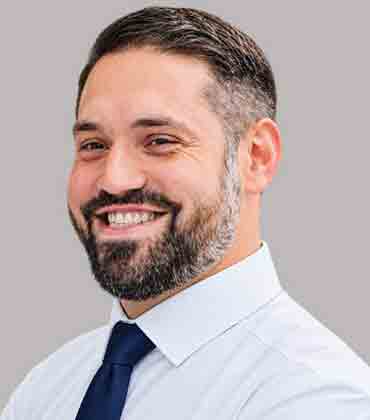
Loïc Vlassakoudis
Healthcare organizations face a paradox. We expect professionals to deliver increasingly complex care, embrace technological innovation and maintain exceptional human relationships with patients, while operating under growing financial and organizational pressure.
Government budget restrictions, workforce shortages and increasing healthcare needs make this equation particularly challenging.
Yet I believe one fundamental reality is frequently underestimated: an organization cannot transform faster than its people can adapt.
As Human Resources Director of Vivalia, a Belgian healthcare organization employing approximately 4,500 professionals across multiple facilities, I experience these contradictions every day.
They have fundamentally shaped my understanding of HR leadership.
When Recruitment Becomes a Structural Challenge
Healthcare recruitment is no longer simply about finding the right candidates.
In our region, the shortage of qualified healthcare professionals is compounded by intense cross-border competition. Located near Luxembourg, we operate in a labor market where certain healthcare professionals can earn salaries sometimes twice as high as those available in Belgium.
No recruitment campaign can eliminate such a structural disadvantage.
This forces us to rethink what makes an employer attractive: meaningful career opportunities, professional development, working conditions, leadership quality and organizational culture.
But we must also acknowledge an uncomfortable truth: employee engagement cannot indefinitely compensate for insufficient resources or excessive workloads.
Strategic HR leadership begins by recognizing these contradictions rather than promising simplistic solutions.
Transforming Hr While Keeping Healthcare Running
When I assumed my current responsibilities, I faced an ambitious challenge: transforming an HR function serving thousands of professionals across historically decentralized healthcare facilities.
Our transformation involved centralizing HR operations, developing specialized expertise and strengthening the role of HR Business Partners.
The difficulty was not simply organizational.
In a healthcare environment operating 24 hours a day, seven days a week, administrative reliability is essential. Payroll, working-time arrangements and employment decisions must remain dependable while structures and practices evolve.
We were effectively transforming the machinery while it was still running.
Moreover, centralization challenges more than processes. It affects professional identities, established relationships and the sense of belonging developed within individual facilities.
I have learned that designing a new organizational structure is relatively straightforward. Convincing people to trust it is considerably more demanding.
Transformation requires clear decisions, transparent communication and the humility to recognize that resistance sometimes reveals legitimate concerns.
Leadership Development: Changing Culture through Everyday Behavior
Another conviction has guided my work: organizational culture is not created through strategic presentations. It emerges from thousands of everyday interactions between managers and their teams.
This is particularly important in healthcare, where managers must reconcile patient care, operational constraints, employee expectations and organizational objectives.
To address this challenge, we have developed a structured leadership journey centered on authentic leadership, selfawareness, emotional intelligence, trust and collaboration.
The objective goes beyond traditional management training.
We want managers to understand how their behavior influences engagement, psychological safety and team performance.
My background in occupational psychology strongly influences this approach.
I believe accountability and empathy are not opposing principles. Setting clear expectations and genuinely caring about people are equally essential to sustainable performance.
Ultimately, the effectiveness of an HR strategy depends largely on what managers do when HR is no longer in the room.
Artificial Intelligence: Transforming Decisions without Losing Judgment
Artificial intelligence offers remarkable opportunities to rethink HR processes, anticipate workforce needs and support evidence-based decisions.
But I am increasingly convinced that the greatest transformation will not come from technology itself. It will come from how organizations redefine work around it.
Alongside our HR digitalization initiatives, I have contributed to establishing an organizational AI committee, bringing together complementary expertise to address responsible adoption and governance.
For me, this illustrates an essential principle: AI cannot remain exclusively an IT matter. It raises fundamental questions about skills, management, professional responsibilities and human behavior.
An algorithm may identify an absenteeism trend. It cannot fully explain why an employee is struggling or why a team has lost confidence.
Data should strengthen our understanding, not replace human judgment.
The question is not simply what AI can automate, but what it can enable people to do better.
An organization cannot transform faster than its people can adapt.
The Future Of Hr Leadership
If I had one lesson to share with emerging HR leaders, it would be this: do not confuse having a seat at the strategic table with genuinely influencing strategy.
HR creates value when it understands operational realities, challenges established practices and translates organizational ambitions into meaningful changes.
This inevitably involves difficult decisions, disagreement and uncertainty.
Our responsibility is not to eliminate these tensions, but to navigate them with consistency, transparency and respect.
I believe the future of HR leadership lies at the intersection of three dimensions: people, organization and technology.
Healthcare organizations will not succeed simply by implementing more reforms or adopting more sophisticated systems.
They will succeed by developing the capacity to transform continuously while preserving the trust and commitment of those who make healthcare possible.
Because ultimately, healthcare transformation is not only about changing organizations.
It is about enabling people to carry those organizations into the future.
The articles from these contributors are based on their personal expertise and viewpoints, and do not necessarily reflect the opinions of their employers or affiliated organizations.
