
Thank you for Subscribing to Healthcare Business Review Weekly Brief
× 
Healthcare Business Review Weekly Brief
Be first to read the latest tech news, Industry Leader's Insights, and CIO interviews of medium and large enterprises exclusively from Healthcare Business Review
A featured contribution from Leadership Perspectives: a curated forum reserved for leaders nominated by our subscribers and vetted by the Healthcare Business Review Advisory Board.

Middlesex Health
Rethinking Care in a Digital Age
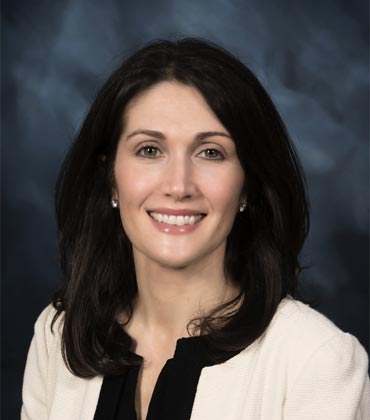
Kelly Haeckel
Kelly Haeckel is a clinician by background and a nurse at heart who serves as Vice President of Patient Care Services and Chief Nursing Officer at Middlesex Health, a six-time Magnet-recognized healthcare system. She oversees nursing practice, patient safety and quality initiatives across the organization, with a particular focus on fall prevention, continuous patient monitoring and evidence-based care. A data-driven leader, she actively engages frontline caregivers in decision-making and champions care models that integrate technology while preserving the human connection at the center of healthcare.
The First Line of Patient Safety
When people talk about continuous patient monitoring, the conversation often turns quickly to technology. My perspective starts somewhere else. Patient monitoring is a team responsibility.
Nurses play a critical role in oversight and patient advocacy, but keeping patients safe requires contributions from every member of the care team. Technology has an important place in that effort, particularly in fall prevention, but it works best when it strengthens clinical judgment rather than attempting to replace it.
Much of our focus has been on reducing falls and preventing injuries associated with falls. The need is growing as patient populations age, especially within community-based healthcare settings. We have worked deliberately to re-engage teams across the organization around risk assessment and prevention strategies that help protect patients before an incident occurs.
Success comes from shared accountability. Every caregiver needs to understand both the risks and their role in reducing them.
The Myth of Technology as a Replacement
One of the biggest misconceptions in healthcare is the belief that technology can fully replace people.
There is tremendous discussion about AI and automation. Many technologies can improve efficiency, strengthen surveillance capabilities and help clinicians make more informed decisions. What they cannot do is replace the human connection that remains essential to safe patient care.
Healthcare organizations are operating under significant financial pressure. Labor costs continue to rise while margins remain constrained. In that environment, there is often interest in finding one-for-one technology substitutions. My experience has shown that the approach rarely succeeds.
Technology can help teams identify risk sooner, strengthen monitoring and support better-informed decisions. Yet some patients, particularly those requiring close observation for behavioral health concerns or safety risks, still depend on direct human interaction.
The People Behind the Numbers
I have always believed that the people closest to the patient should be closest to the decision-making process.
Whenever I want to understand a challenge, I go directly to the clinicians doing the work. They understand the realities of care delivery in ways that leadership alone cannot. That same philosophy applies to data.
Data tells a story, but only if people know how to interpret it. Evidence and measurement matter because improvement depends on both. Yet data becomes meaningful only when frontline caregivers understand what is being measured and why it matters.
At Middlesex Health, advancing clinical practice through evidence remains a priority. We continually evaluate outcomes, examine research and use data to guide improvement efforts. Still, meaningful change cannot happen if clinicians are excluded from the conversation. Their perspective is what transforms information into action.
Turning Information into Better Decisions
We work hard to create a culture where data drives decisions rather than simply generating reports.
One advantage we have is a strong commitment to nursing research and evidence-based practice. We invest significant effort in helping clinicians strengthen their ability to interpret information and apply it in meaningful ways, supported by a nurse scientist.
Technology is advancing rapidly, and healthcare must evolve alongside it. Innovation succeeds when it strengthens how care is delivered and supports clinical judgment rather than constraining it.
Specialized roles such as Clinical Nurse Leaders (CNL) help bridge that gap by analyzing data at both the microsystem and organizational levels, identifying opportunities for improvement, and partnering with frontline staff to translate evidence and findings into meaningful changes in patient care. They examine data at a broader level, identify opportunities for improvement and then work alongside staff to translate findings into practical changes at the bedside.
Monitoring outcomes is part of our daily work. Nursing measures are reviewed consistently, trends are examined closely and teams are expected to understand what the numbers are telling us.
Designing With Clinicians, Not for Them
The success of any monitoring technology depends on whether frontline caregivers embrace it.
Clinicians need to be involved from the beginning. They understand where workflows create friction and what patients truly need. Their input is essential when evaluating new systems or redesigning existing processes.
Trust is equally important. Care teams must understand how technology functions, how it supports care delivery and how its performance is validated. Blind faith in technology is not enough. Clinicians need confidence that the tools align with the realities of practice and support the work they do each day.
Standardization also plays an important role. Consistent workflows reduce variation and help teams use technology more effectively. Before implementing change, leaders need to walk through processes alongside staff, understand what works and identify where improvements can be made.
Simulation can be particularly valuable in that process. When caregivers have the opportunity to test ideas in a realistic environment, they often discover opportunities that would otherwise remain hidden. Those conversations often reveal work that can be simplified and responsibilities that still require human judgment.
Reimagining the Future of Care Delivery
When I think about the future, I think less about monitoring devices and more about how healthcare teams are structured around patient care.
My ideal model places nurses at the center of care delivery, practicing fully within their expertise and clinical judgment. Too often, nurses remain responsible for tasks that could be handled differently. Technology should help remove those burdens so clinicians can focus their attention where it creates the greatest value for patients.
That vision does not diminish the importance of other disciplines. Healthcare is a team effort, and every role contributes to patient outcomes.
What needs to change is our willingness to challenge assumptions. Whenever someone tells me, “We’ve always done it this way,” my response is simple. Tell me how we can do it differently.
Technology is advancing rapidly, and healthcare must evolve alongside it. Innovation succeeds when it strengthens how care is delivered and supports clinical judgment rather than constraining it.
The goal is to eliminate unnecessary work, not human care itself. When we remain thoughtful about that distinction, we create better experiences for clinicians and better outcomes for patients.
The articles from these contributors are based on their personal expertise and viewpoints, and do not necessarily reflect the opinions of their employers or affiliated organizations.
